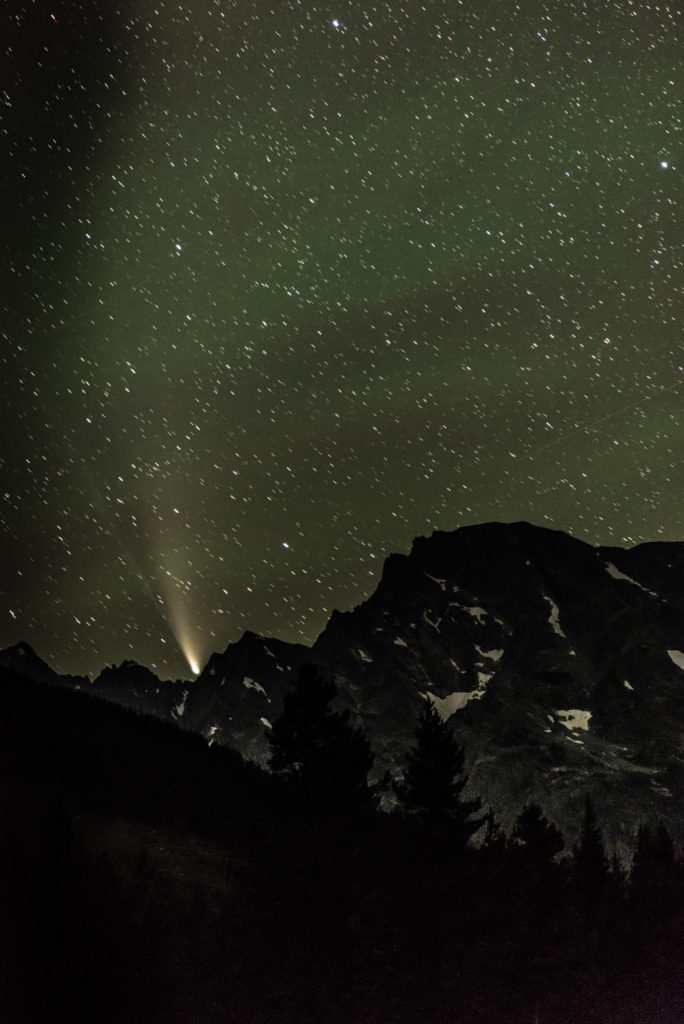
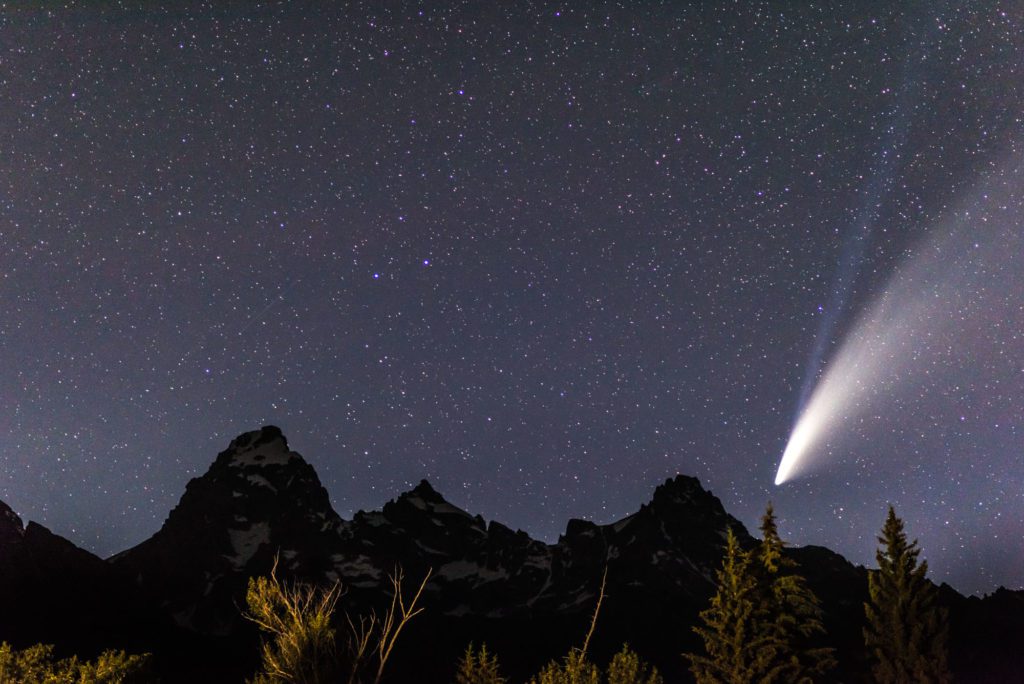
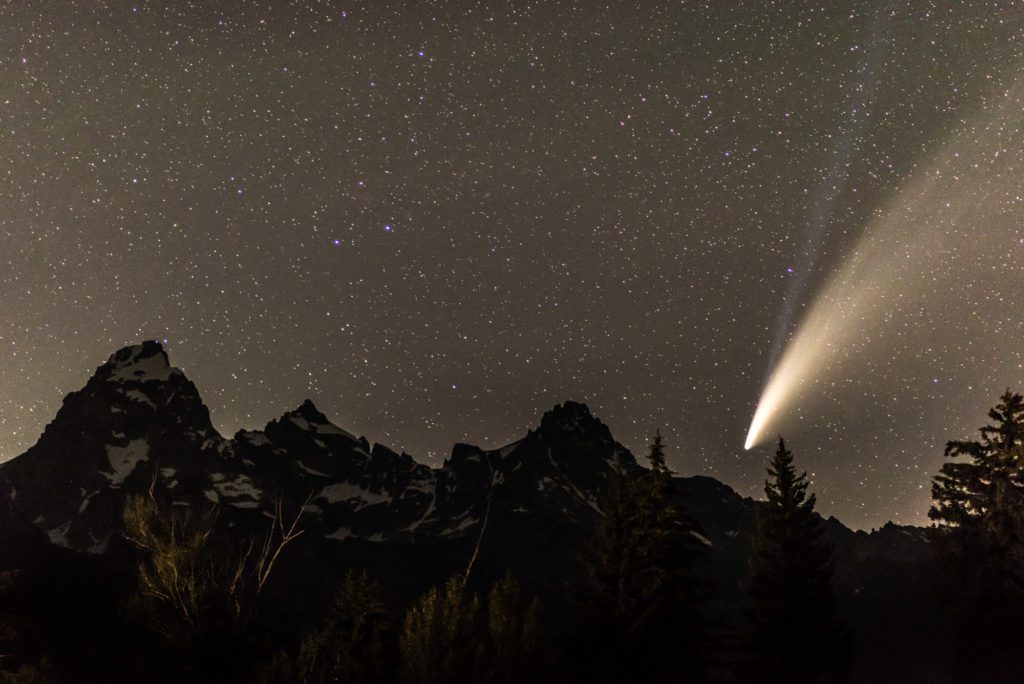
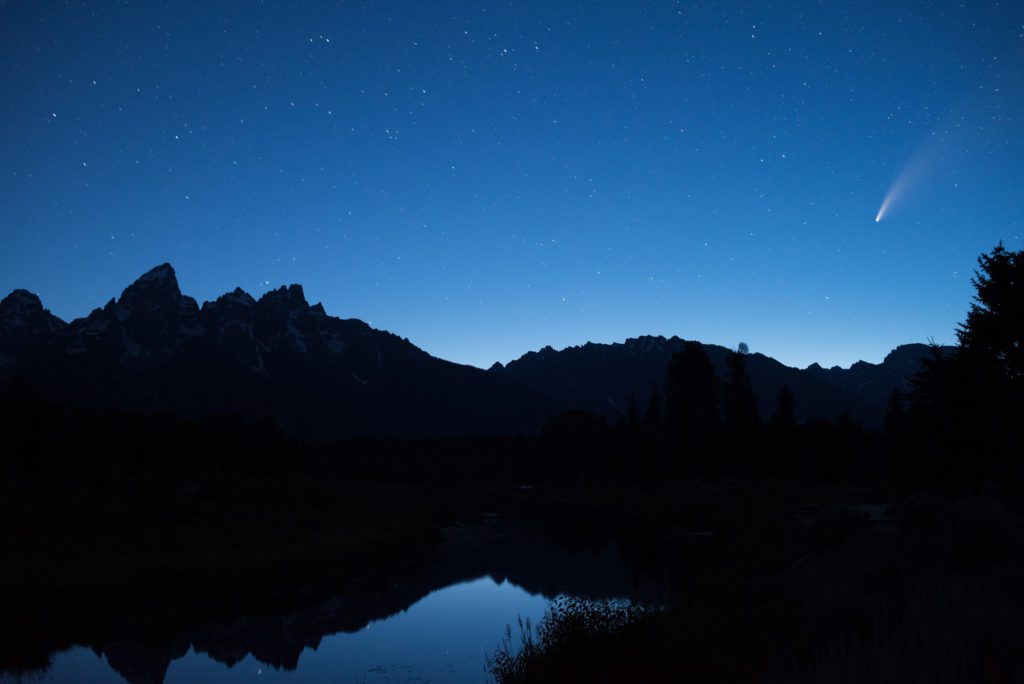
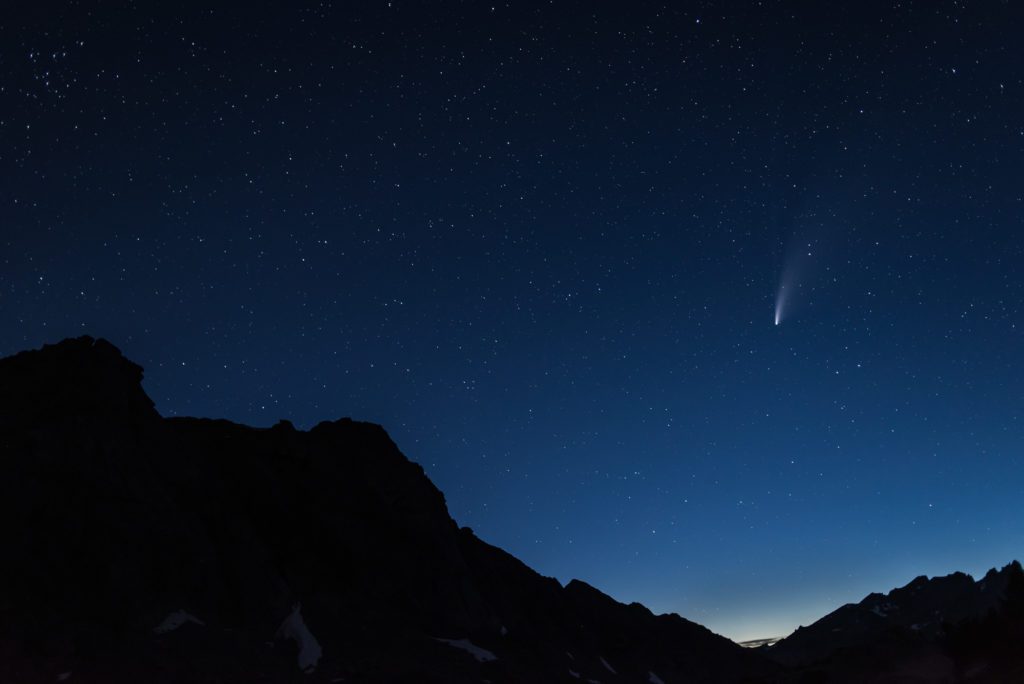
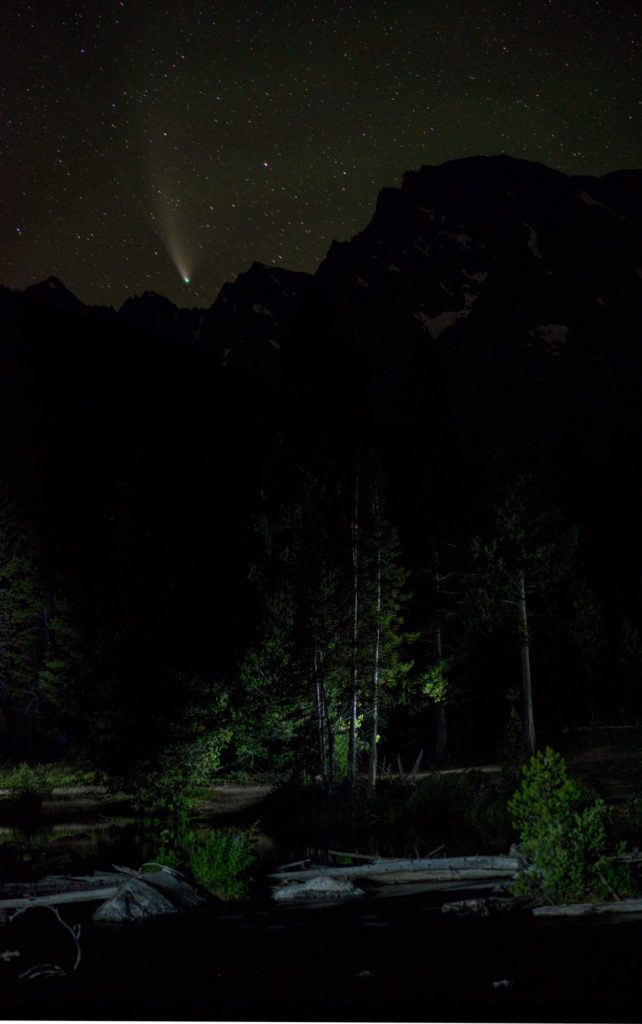
C/2020 F3 or Comet NEOWISE above Grand Teton National Park. Photographed from Dornan’s in July 2020. Discovered in March 2020, the comet will be visible again in the year 8786.
Herd of Moose in Grand Teton National Park.
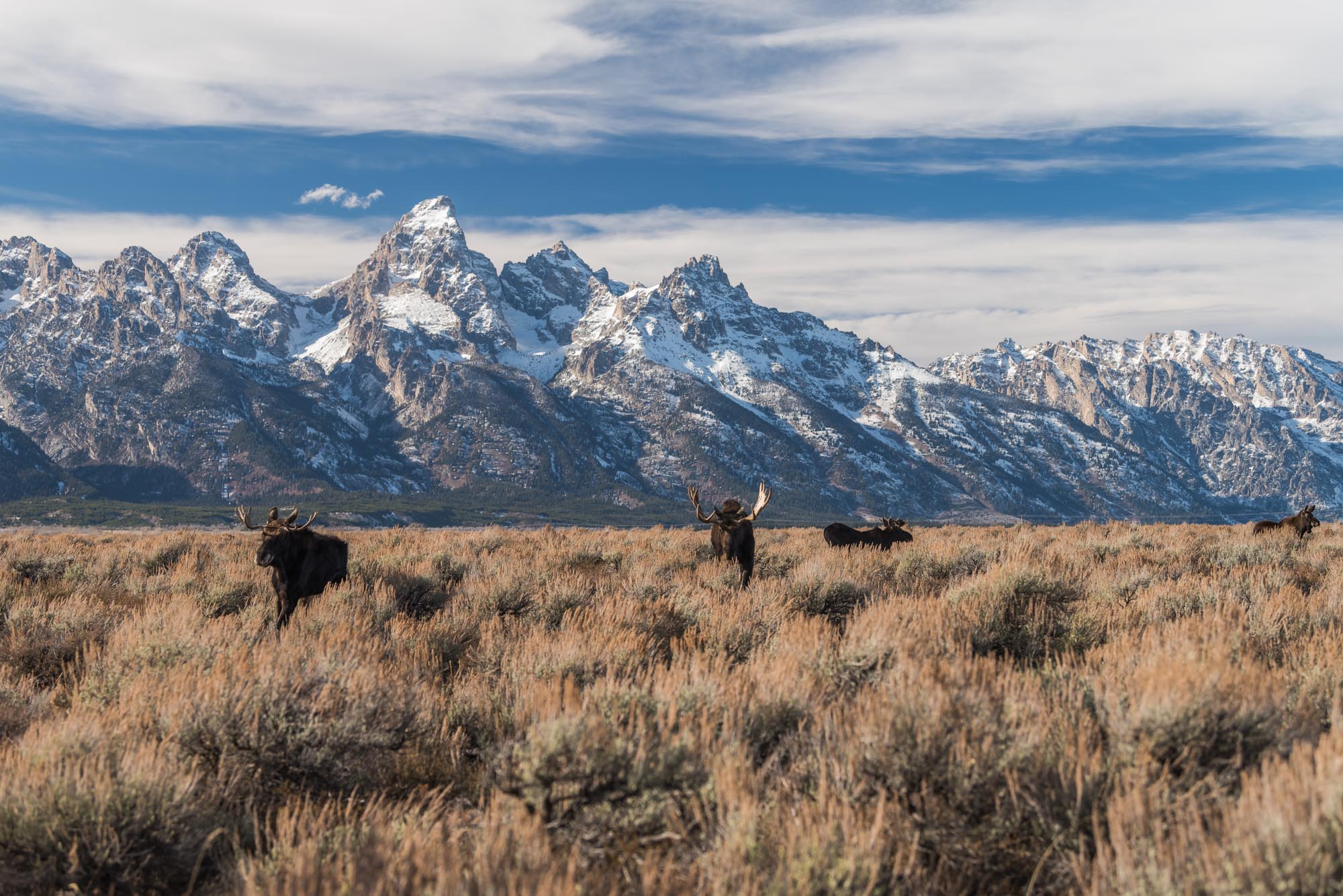
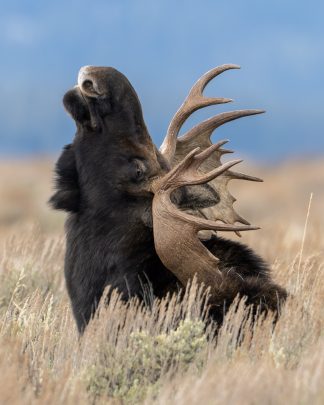
According to Wikipedia “Unlike most other deer species, moose do not form herds and are solitary animals, aside from calves who remain with their mother until the cow begins estrus (typically at 18 months after birth of the calf), at which point the cow chases away young bulls. Although generally slow-moving and sedentary, moose can become aggressive and move quickly if angered or startled. Their mating season in the autumn features energetic fights between males competing for a female.”
Contrary to this, over the years I’ve learned that moose do gather in herds. The easiest place to view this is around Blacktail Butte in Grand Teton National Park. Fall and early winter are the prime viewing season. The moose group in far greater numbers, perhaps because of mating season. The bulls still have antlers too, they wont fall off until later this winter.


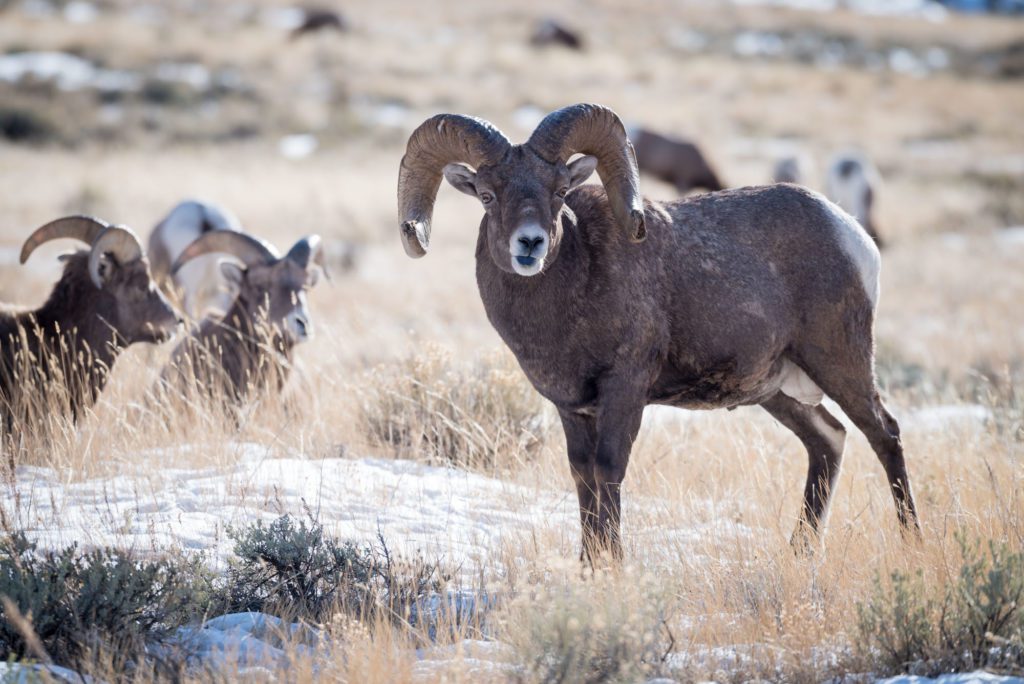
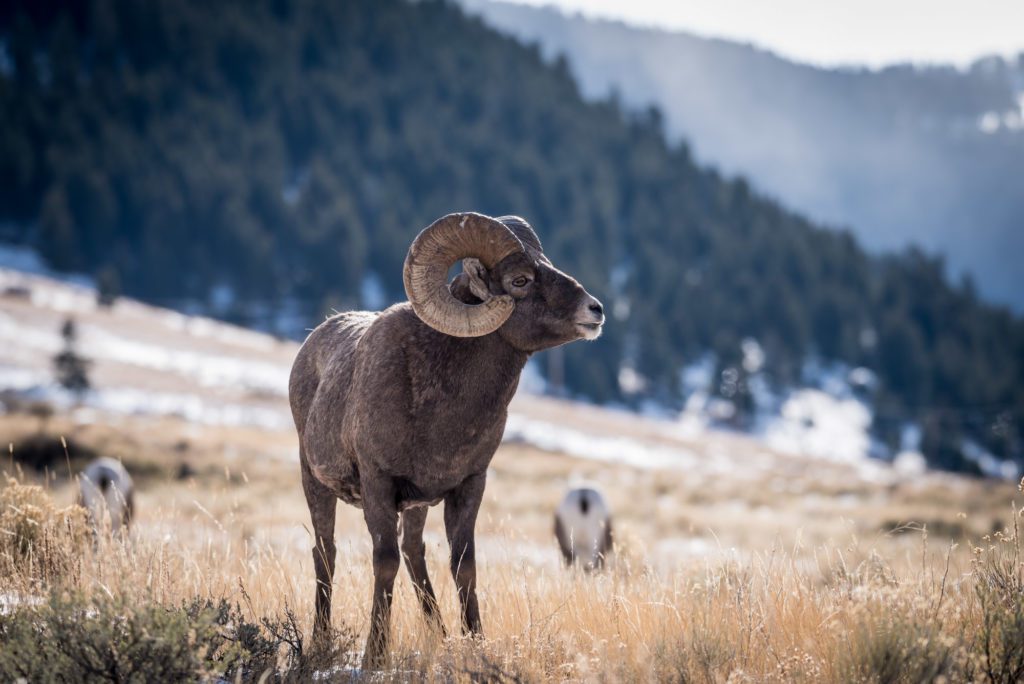
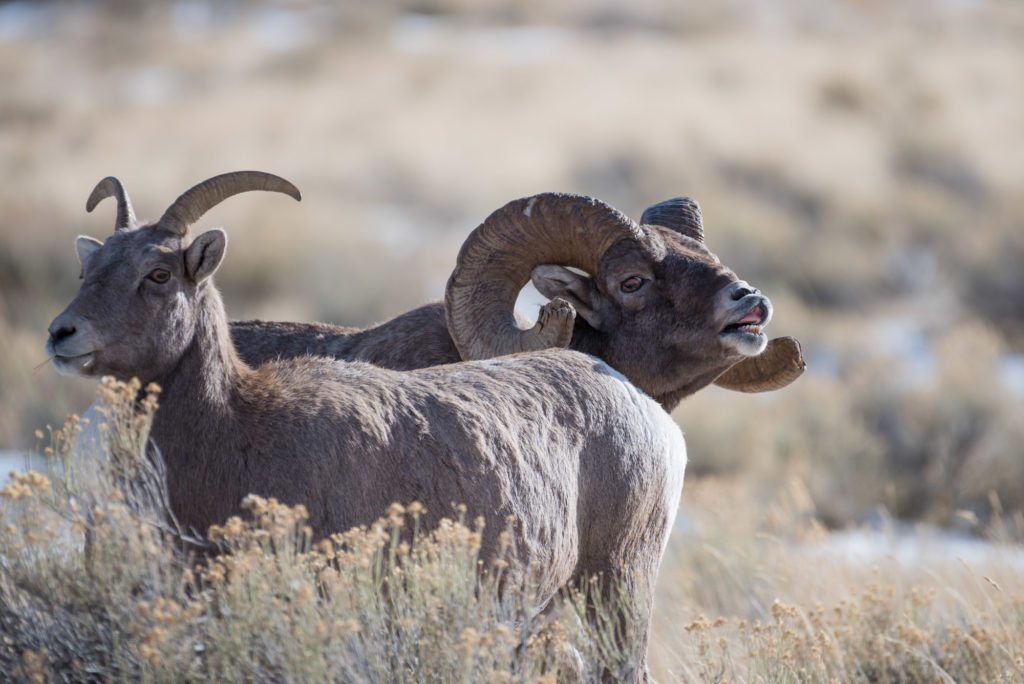
Big Horn Sheep
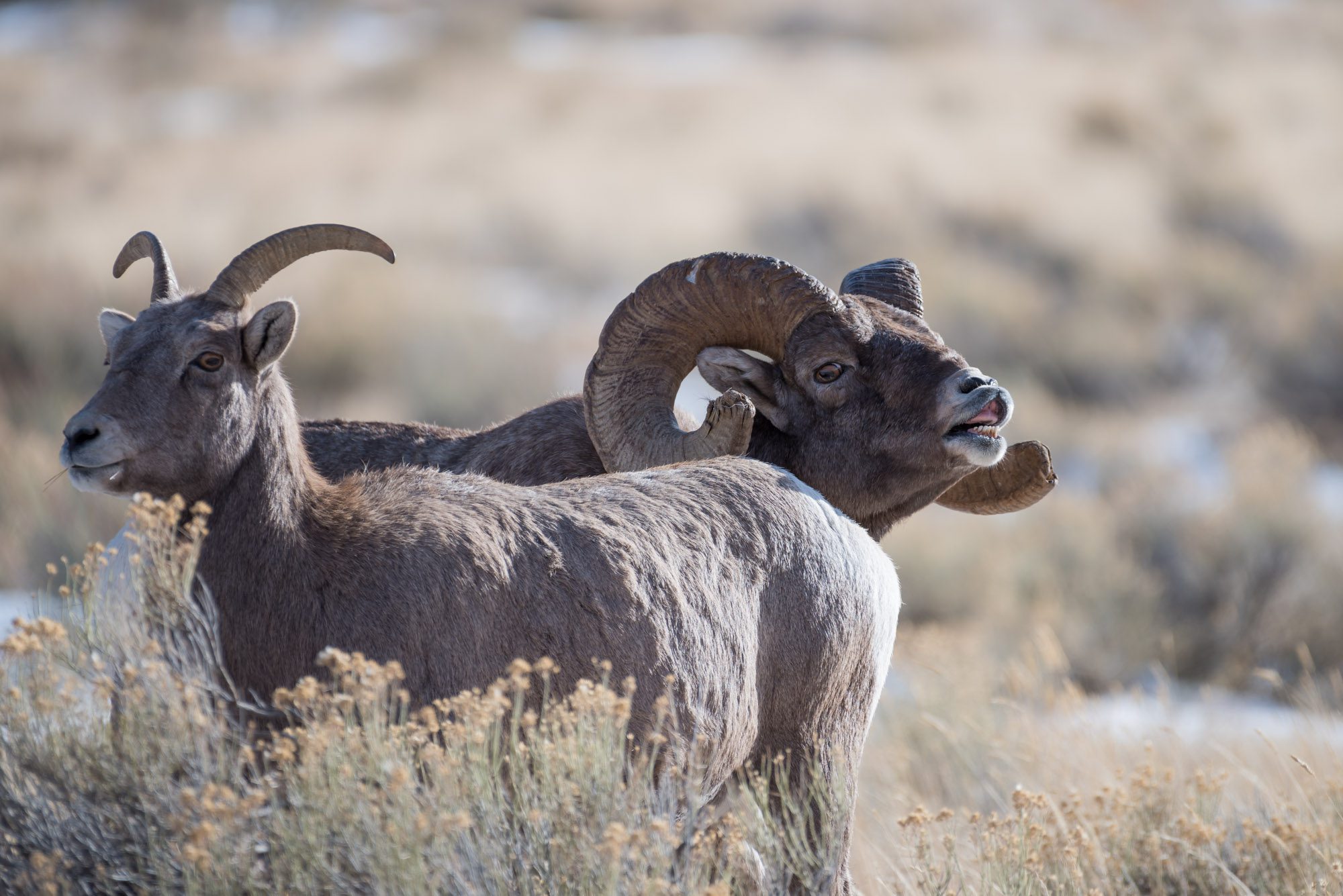
Big Horn Sheep, unlike mountain goats, are native to the mountains of Grand Teton National Park. Female sheep, Ewes, also have horns although they are much smaller than a mature rams. I was luck enough to see these magnificent animals behind the National Elk Refuge at Miller Butte. I’ve seen sheep throughout the year, but early winter seems ideal as this coincides with mating season and the sheep seem to gather in the lowlands.